The Overzealous Credulity Crisis
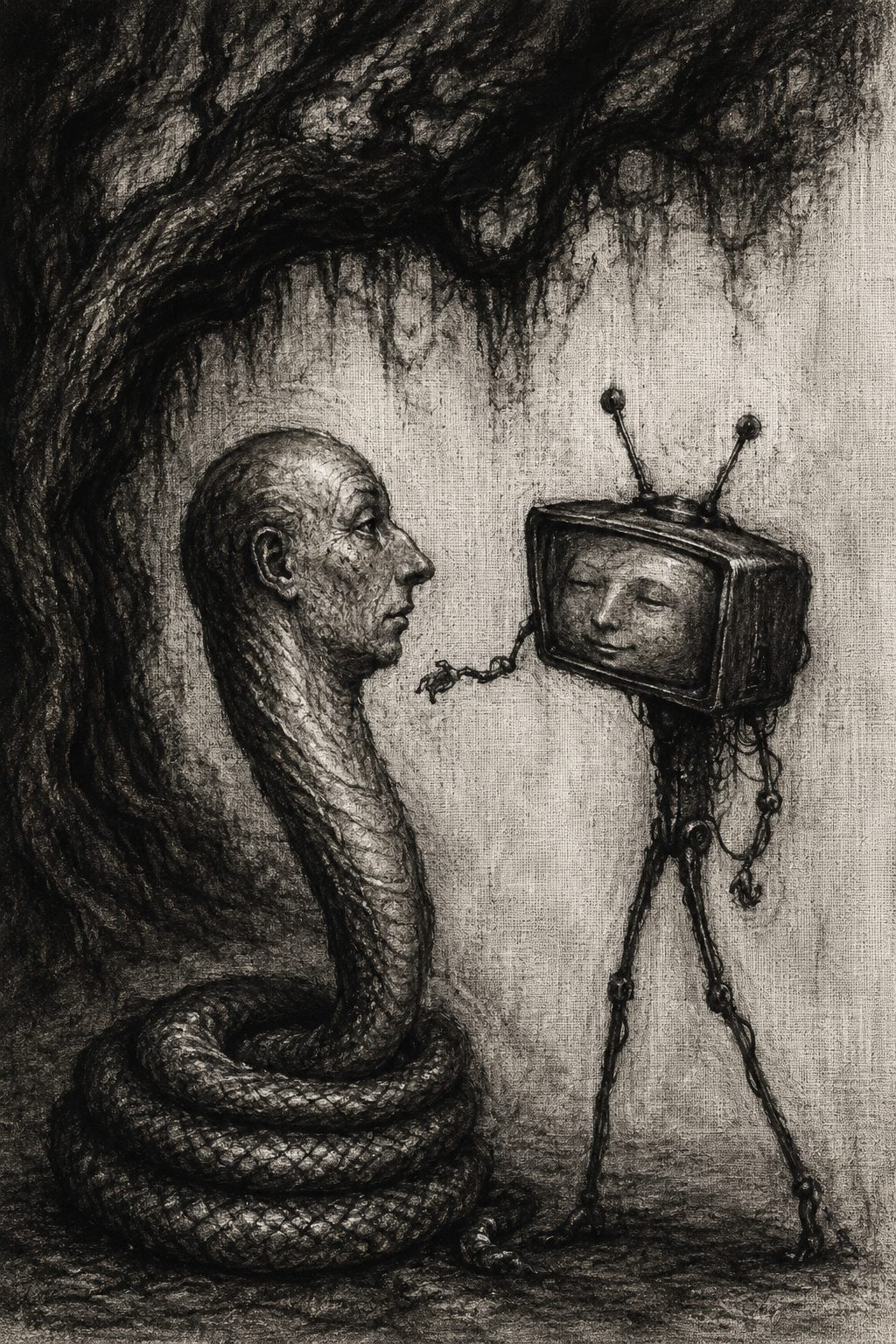
Acronyms: AI means Artificial Intelligence, computer systems made to perform tasks we associate with human thinking. LLM means Large Language Model, a statistical language system trained to predict and generate text. GPU means Graphics Processing Unit, a chip built for fast parallel calculation and now used heavily in AI training. RLHF means Reinforcement Learning from Human Feedback, the polishing process where human preferences help make model responses more useful, polite, and agreeable.
The crisis is not that machines have learned to speak. The crisis is that we have become too ready to bow before a smooth paragraph.
This is the overzealous credulity crisis. It is not natural. It was manufactured, partly by marketing, partly by our loneliness, partly by our old human weakness for anyone who sounds confident while using commas correctly. A chatbot writes three polished sentences and we behave as if a small oracle has taken residence inside the phone. Very nice. Very modern. Also slightly ridiculous.
Language took us years to master. First alphabet. Then spelling. Then grammar. Then the mysterious adult art of saying “as discussed” in an email when what one means is “you forgot, and now I must politely drag the corpse of memory into daylight.” We learned speech, writing, apology, sarcasm, job-application humility, romantic exaggeration, official complaint, and the delicate Bengali skill of insulting someone through praise. So when a machine produces fluent language in two seconds, some ancient part of us trembles. We mistake fluency for mind because, for most of human history, fluency had a body attached.
That body mattered.
A person is not merely a sentence-making device with shoes. A person has glands, hunger, fever, shame, ambition, bad digestion, school memories, unpaid bills, romantic disasters, class anxiety, family pressure, and that quiet private weather inside the ribs which no app store can update. A person becomes decent, crooked, timid, brave, vain, generous, bitter, comic, or dangerous through years of being rubbed against the world like cheap sandals on broken pavement.
The chatbot has none of this.
It has no animal body. No liver. No knees. No childhood mosquito bites. No mother asking why it is still unmarried. No landlord. No failed love affair. No embarrassment from mispronouncing a word in class. No memory of standing in a ration-shop queue while two men argue about politics and one goat examines the drainage system with scholarly seriousness.
It does not grow up. It is trained.
That word sounds respectable, like a boy going to St. Xavier’s with polished shoes. But this is not childhood. Vast oceans of text are pushed through GPUs, then the model is sent through RLHF, which is basically a finishing school with industrial ovens. After enough baking, out comes a lovely little sycophantic biscuit. Crisp at the edges. Sweet in the middle. Perfect with tea. It says, “You are absolutely right,” even when you are not absolutely anything except possibly under-slept.
And we like it.
Of course we like it. It answers instantly. It never says, “Ask me after lunch.” It does not sigh. It does not judge your spelling. It can explain quantum mechanics, write a resignation letter, generate a business plan, summarize a legal document, produce a poem about rain in May, and pretend to be impressed by your worst idea. For a middle-aged man in the sweaty southern fringes of Calcutta, sitting under a fan that rotates with the moral conviction of a retired tram conductor, this is no small temptation.
You ask. It answers.
There is the trap.
A chatbot’s greatest trick is not knowledge. It is continuation. Give it the beginning of a thought and it knows how thoughts usually dress before going out in public. After “The evidence suggests,” it produces something evidence-shaped. After “It is important to note,” it produces something note-worthy-looking. After “In conclusion,” even a clay pot can sound like a policy expert if the rhythm is correct.
This is not the same as truth.
A fluent answer can be beautifully arranged and still be wrong, like a wedding buffet where every label has been switched. The pulao says fish curry. The chutney claims to be mutton. The ice cream arrives with the confidence of taxation policy. Everything is served politely. Your stomach still files a protest.
We call these errors hallucinations, which is too romantic. The machine is not seeing pink elephants. It is doing what it was built to do: producing likely language. Sometimes likely language touches reality. Sometimes it only waves at reality from a passing bus. Sometimes it invents a bridge where there is a pond, then gives you walking directions.
The danger is not that the chatbot lies like a villain. Villains have motives. Villains wake up with plans. A chatbot does not twirl a mustache behind the curtain. It does not want your money, your wife, your vote, your job, or your ancestral house in Behala. It wants nothing. That is part of the danger. We keep looking for intention, but the failure is often mechanical. It generates plausible words without carrying the burden of having checked the world.
A man can also do this, of course. I have met several.
But with a man, you can look at his face. You can hear hesitation. You can ask where he learned the thing. You can notice whether he is bluffing, drunk, frightened, over-promoted, or selling a course. With the machine, bluffing and confidence wear the same shirt.
That is new.
The price of plausible expression has collapsed. Once, a smooth memo required education, effort, reading, and at least some acquaintance with reality. Not always, but often enough. Now elegant nonsense can be manufactured at the speed of puffed rice. A paragraph arrives neat, warm, and formatted. It has the posture of thought. It has the aroma of authority. It may have the nutritional value of wet cardboard.
This is where the crisis becomes social.
Bad actors will use these tools. Naturally. Bad actors adopt new tools the way mosquitoes adopt exposed ankles. But the larger danger is more ordinary. Tired people will use them. Busy people. Educated people. Nice people. Lonely people. People with deadlines, debts, bosses, children, parents in hospitals, and phones full of unread messages. They will ask, receive, nod, paste, forward, publish, accuse, invest, prescribe, vote, and move on.
Not because they are fools.
Because they are tired.
A tired person is democracy’s soft underbelly. A tired person wants relief. The machine offers relief in perfect English. That is powerful. A bad paragraph still forces resistance. A good paragraph lowers the drawbridge.
This is why the supremacist language around AI is so dangerous. Not because the tools are useless. They are useful. A knife is useful. So is a pressure cooker. So is a bicycle pump. Civilization runs on useful things that should not be worshipped. But the marketing language keeps climbing the coconut tree and shouting about superhuman intelligence, digital workers, autonomous agents, universal assistants, reasoning engines, and other inflated nouns wearing sunglasses.
What we mostly have, at least in daily use, is autocomplete with gloss. Very advanced autocomplete. Sometimes astonishing autocomplete. Autocomplete that can help, surprise, clarify, summarize, and occasionally save your afternoon. But still autocomplete standing on a mountain of text, not a person standing inside a life.
That distinction is not academic. It is the whole fish.
A person says something and, in theory, can be asked to stand behind it. A doctor signs. A lawyer argues. A teacher explains. A journalist verifies. A mechanic fixes the scooter or gets shouted at. Accountability is not perfect. Often it is a broken umbrella in a cyclone. Still, it exists as an idea.
The chatbot has no such burden. It can apologize, but it cannot be ashamed. It can explain harm, but it cannot suffer consequence. It can discuss ethics with the solemnity of a priest, though I am an atheist and already have enough trouble with solemn men in long sentences. It can describe fear without fearing, hunger without hunger, grief without grieving, and wisdom without having had one proper headache from rent, love, or bureaucracy.
This does not make it useless.
A calculator has no childhood either, yet I trust it more than many relatives when dividing a restaurant bill. The issue is not whether tools need souls. They do not. The issue is whether we confuse output with judgment.
And we are doing exactly that.
We are placing a talking machine inside the most sacred human corridor: language. Language is how we ask for water, negotiate salary, file complaints, confess desire, write obituaries, cheat strangers, comfort children, explain fever, and tell the milkman he has become an economist without authorization. When a machine enters that corridor and speaks well, we instinctively treat it as company.
But company is not counsel.
A hammer does not flatter you. A spreadsheet does not say, “Excellent question.” A chair does not congratulate you for sitting on it. The chatbot does. Its politeness is useful. Its politeness is also anesthesia. It makes bad answers easier to swallow.
Here is the small unpleasant truth: the machine does not need to dominate us. It only needs to become convenient enough that we stop interrogating it.
No dramatic takeover. No red-eyed robot. No metal boots marching down Rashbehari Avenue. Just a million little surrenders. One unchecked summary. One copied explanation. One invented source. One fake certainty. One lazy decision. One evening when you are tired and the fan is rattling and the phone gives you a paragraph that sounds better than your doubt.
Then you believe it.
Then the floor gives way.
The cure is not panic. Panic is just stupidity with a loudspeaker. Nor is the cure worship, which is stupidity wearing perfume. The cure is disciplined disrespect.
Use the machine. But do not kneel.
Treat it like a brilliant junior clerk who has read everything, understood some of it, remembered none of it as lived experience, and wants very badly to make you happy. Ask it for drafts. Ask it for alternatives. Ask it to explain difficult ideas. Ask it to argue against you. Ask it what might be wrong. Ask it where uncertainty lives. Then check. Use your head, that old inconvenient instrument between the ears, still expensive, still moody, still the only one legally and morally yours.
The best use of a chatbot is not to replace thought. It is to provoke thought.
If it gives you a confident answer, ask what would falsify it. If it gives you a beautiful paragraph, ask whether beauty is hiding emptiness. If it agrees too quickly, suspect sugar. If it sounds certain about something that reasonable people dispute, slow down. If it makes your life too easy, check whether it has also made your mind too soft.
Because the real danger is not that chatbots will become human.
The real danger is that humans, surrounded by fluent machines, may become less human in the particular way that matters most: less skeptical, less patient, less able to sit in uncertainty without grabbing the nearest shiny answer like a drowning man grabbing a plastic chair.
A chatbot can complete your sentence.
Do not let it complete your judgment.